
The Organization Leaders Believe
They Are Leading
Why Leaders Gradually Lose Visibility Into the Organizations They Built
Power Architecture • Authority | 21 June 2026
Strategic clarity at the top does not guarantee institutional coherence.
Every complex organization eventually develops two structures.
Leaders may no longer be leading the organization they believe they are leading.
Most successful leaders possess extraordinary clarity.
They build the platform. They set the strategy. They define the culture. They articulate the mission.
They often possess a remarkable ability to see the future.
Yet many large organizations gradually evolve into something different from what their leaders believe they are leading.
The greatest risk facing large institutions may not be poor strategy, weak assets, or inadequate talent.
Successful organizations possess extraordinary amounts of these.
The greatest risk is that the organizations their leaders believe they are governing no longer exist in the form they imagine.
Most people assume:
Good leader, good organization. Bad leader, bad organization.
Reality is far more complicated.
Exceptional leaders can build extraordinary organizations.
Yet extraordinary organizations can gradually lose their ability to preserve a shared understanding of reality across the system.
Especially under acceleration.
Because acceleration creates a structural consequence of speed and scale.
As organizations expand, judgment becomes distributed across committees, functions, geographies, and layers of interpretation.
Authority remains concentrated.
Understanding becomes fragmented.
Strategic clarity remains.
Institutional coherence becomes increasingly difficult to preserve.
Over time, leaders increasingly experience their organizations indirectly.
Through dashboards.
Through narratives.
Through summaries.
Through translated interpretations.
The organization they govern and the organization they experience gradually diverge.
The challenge facing institutions under acceleration may no longer be preserving strategic clarity.
It may be preserving institutional coherence.
I. Strategic Clarity Does Not Guarantee Institutional Coherence
Modern institutions are often built by leaders with exceptional judgment and endurance.
They understand capital allocation.
They recognize long-term trends.
They define direction and culture.
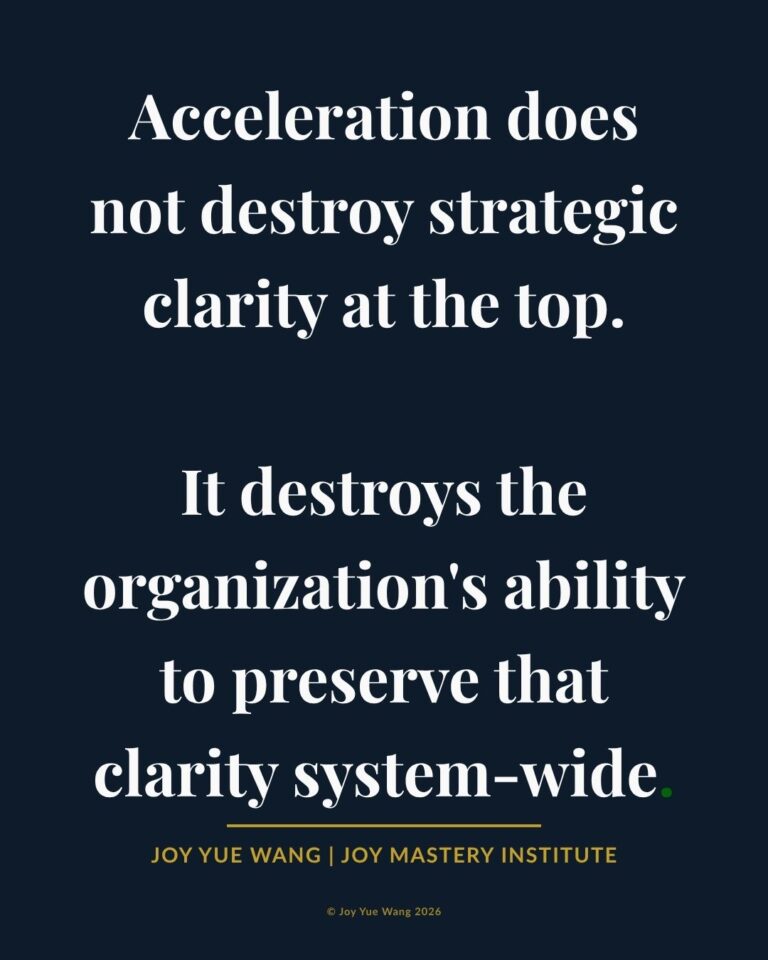
Acceleration does not necessarily destroy strategic clarity at the top.
It destroys the organization’s ability to preserve that clarity system-wide.
As organizations scale, decisions become increasingly distributed.
Committees emerge.
Functions specialize.
Information travels through multiple layers before reaching authority.
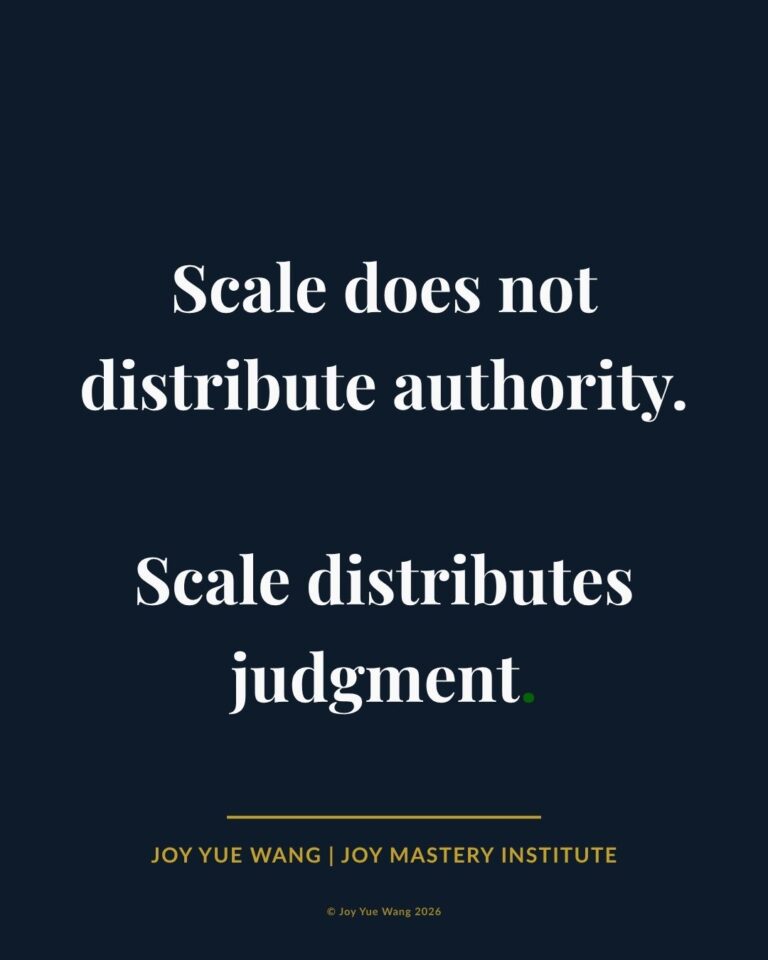
Scale does not distribute authority.
Scale distributes judgment.
Authority remains.
Direction remains.
Ethos remains.
But judgment becomes distributed.
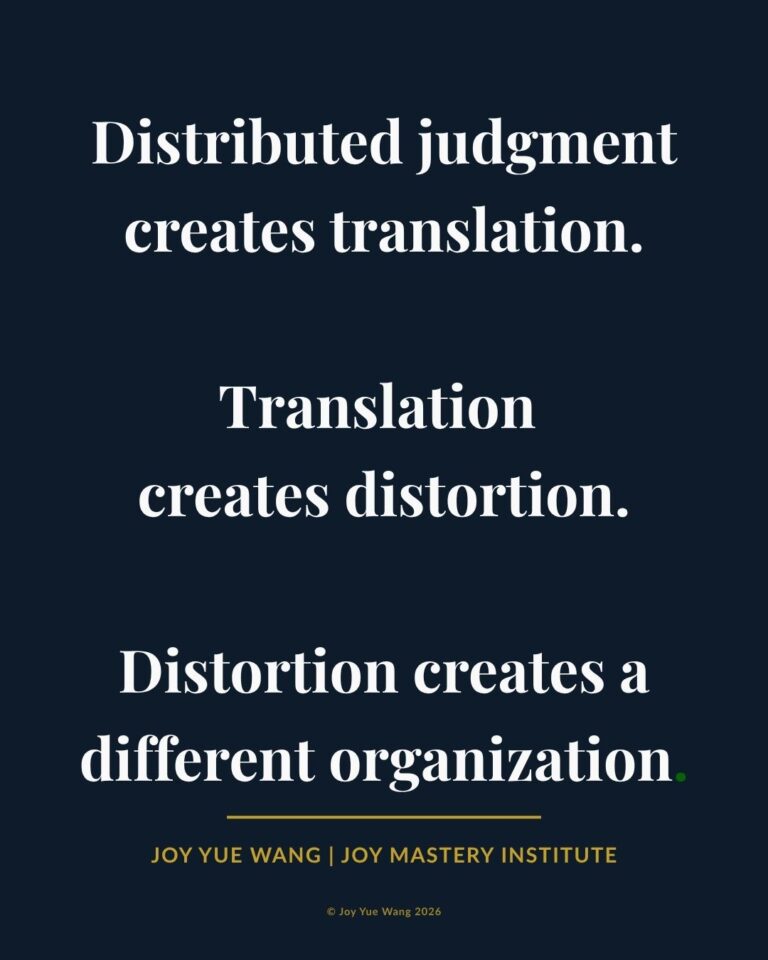
Distributed judgment creates translation.
Translation creates distortion.
Distortion creates a different organization.
Not because leaders become detached.
Because scale requires distribution.
Over time, the challenge is no longer whether leadership sees clearly.
The challenge becomes whether the institution can preserve that clarity across the system.
II. Empires Within the Empire
Most organizational failures do not begin with dishonesty.
Nor do they begin with incompetence.
They begin with translation.
Managers summarize.
Committees synthesize.
Executives interpret.
Middle layers translate.
Narratives replace raw signals.
Power increasingly shifts toward those who influence interpretation without bearing equivalent consequences.
This is Power Distortion.
Information becomes shaped long before it reaches authority.
The higher authority rises, the more reality becomes mediated.
Not because subordinates are dishonest.
Not because leaders are incapable.
But because complexity itself inserts interpretation.
As scale compounds, different parts of the organization begin to inhabit different realities.
Same strategy. Different interpretations.
Same culture. Different incentives.
Same KPIs. Different agendas.
Different parts of the institution increasingly function like different companies.
Empires within the empire.
III. Institutional Coherence Decay
Institutions rarely fail because disagreement exists.
Disagreement exposes differences.
The greater danger is assumed alignment.
People speak the same language.
Follow the same strategy.
Attend the same meetings.
Yet operate from increasingly different realities, interpretations gradually diverge.
Agreement becomes performative.
Alignment becomes assumed.
Consensus becomes optics.
Institutional coherence gradually weakens.
Performance may continue.
Growth may continue.
Success itself can conceal fragmentation.
By the time consequences become visible, divergence has often existed for years.
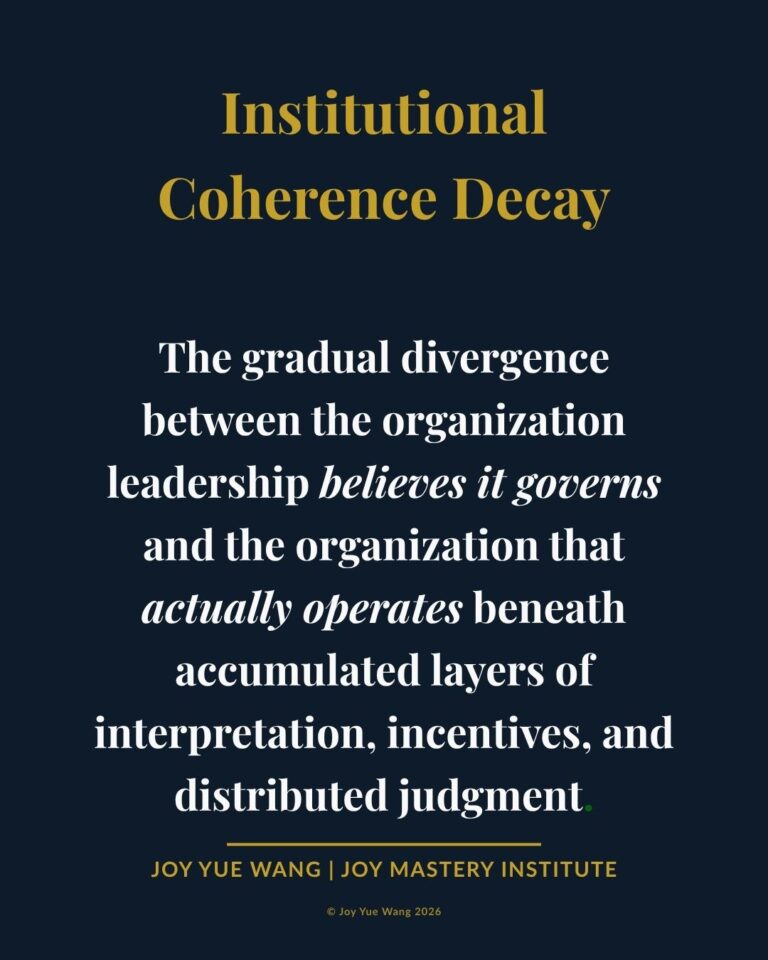
Institutional Coherence Decay is the gradual divergence between the organization that leadership believes it governs and the organization that actually operates beneath accumulated layers of interpretation, incentives, and distributed judgment.
IV. Three Stewardship Archetypes
1. The Architect
Builds extraordinary institutions. Maintains strategic clarity.
Genuinely cares deeply. Trusts the organization.
Experiences growing complexity, but attributes most tensions to scale, execution, or market conditions.
Especially when their own strategic clarity remains, the gradual loss of institutional coherence rarely appears as the primary explanation of why things now feel hard.
2. The Custodian of Decay
Recognizes distortion. Benefits from it.
Preserves narratives over reality. Stability over truth.
Under their stewardship, Institutional legitimacy slowly erodes.
3. The Blind Steward
Neither corrupt nor visionary.
Simply overwhelmed.
Experience the organization through dashboards, committees, and translated narratives.
Mistakes summaries for reality.
Most leaders belong here.
V. Power Architecture
Every complex organization eventually develops two structures.
The one shown on the org chart.
And the one that actually determines how consequential decisions form.
The challenge facing leaders is no longer simply managing performance.
It is preserving institutional coherence.
Leaders rarely fail because of lack of information.
They fail when critical decisions are already being shaped elsewhere.
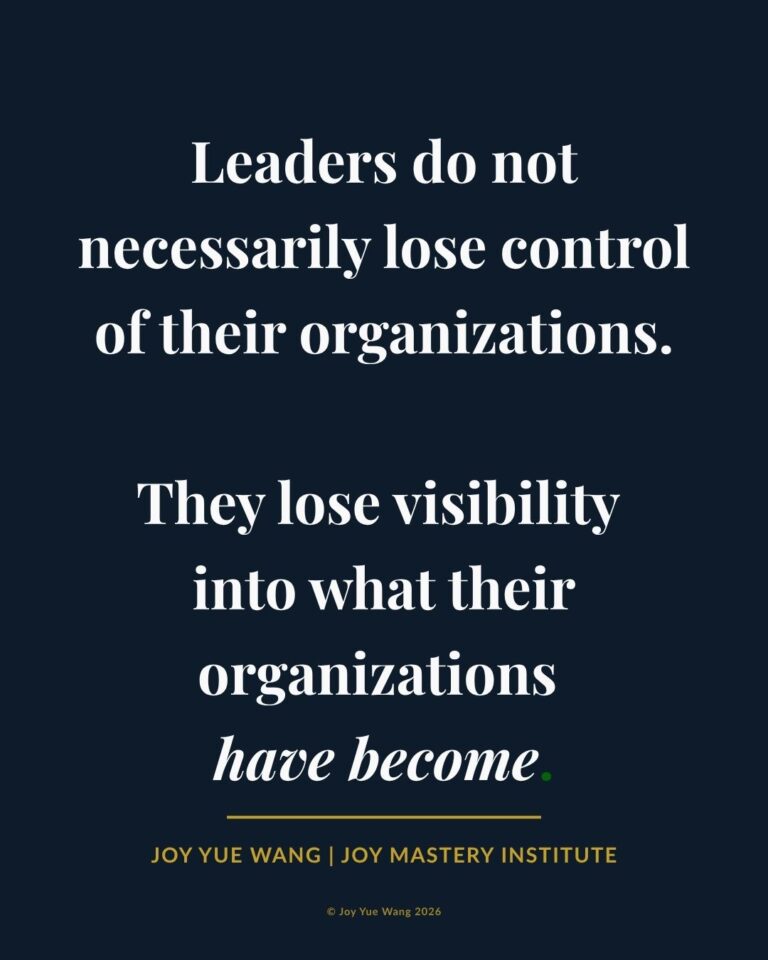
Leaders do not necessarily lose control of their organizations.
They lose visibility into what their organizations have become.
Performance can conceal incoherence.
Growth can conceal fragmentation.
Stability can conceal drift.
And when consequences eventually surface, they often appear sudden.
In reality, the organization had been changing long before leadership noticed.
Preserving institutional coherence may become one of the defining governance challenges of the Age of Acceleration.
During a dragon boat race, victory depends not only on the strength of individual rowers, but on their ability to remain synchronized.
As speed increases, synchronization becomes harder.
Not because the rowers are not good enough.
But because coherence itself becomes more difficult to preserve.
Institutions face a similar challenge.
Their greatest risk may not be a lack of intelligence, talent, strategy, or capital.
It may be that the organization their leaders believe they are governing no longer exists in the form they imagine.
© 2026 Joy Yue Wang. All rights reserved.