An Institutional MRI - not to tell leaders what to do, but reveal what they cannot yet see
Making Invisible Structures Visible.
Decision Architecture is a field developed by Joy Yue Wang through Joy Mastery Institute. All rights reserved.
The Architecture of Consequential Decisions
A structural map of how institutions and decision-makers remain connected to reality, or become separated from it, as complexity accelerates.
Institutional Distortions
Most organizations don’t need another prescription. They need a better clarity.
Visible Distortions
Authority vs Influence
Incentives vs Responsibility
Consensus vs Accountability
Structural Distortions
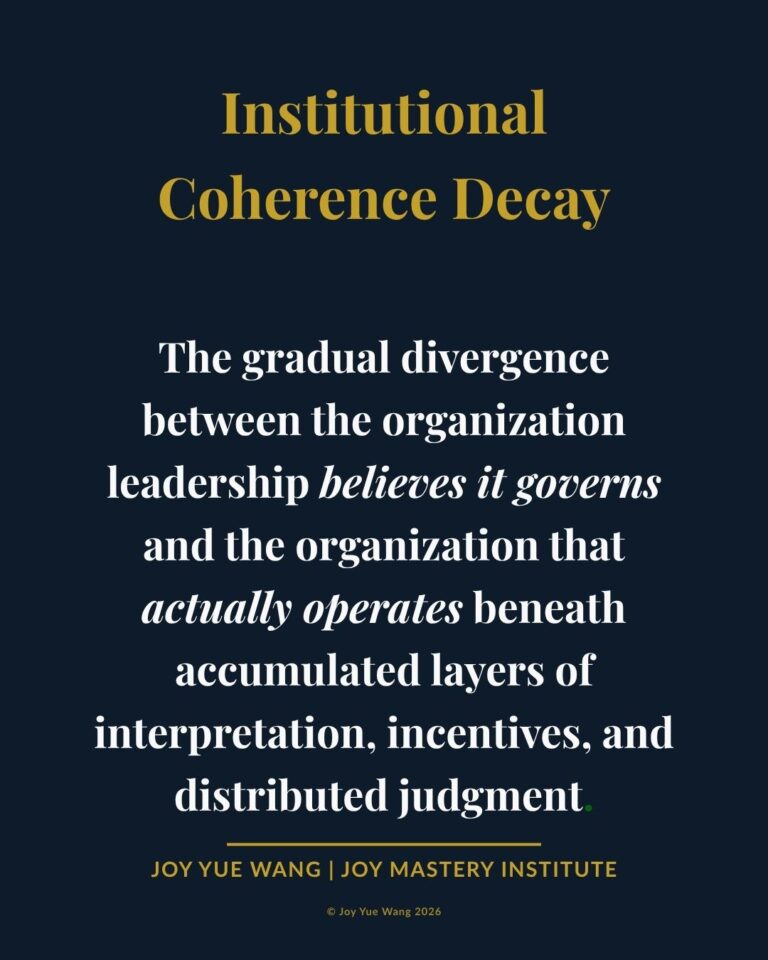
Power vs Legitimacy
Information vs Signal Integrity
Stability vs Structural Fragility
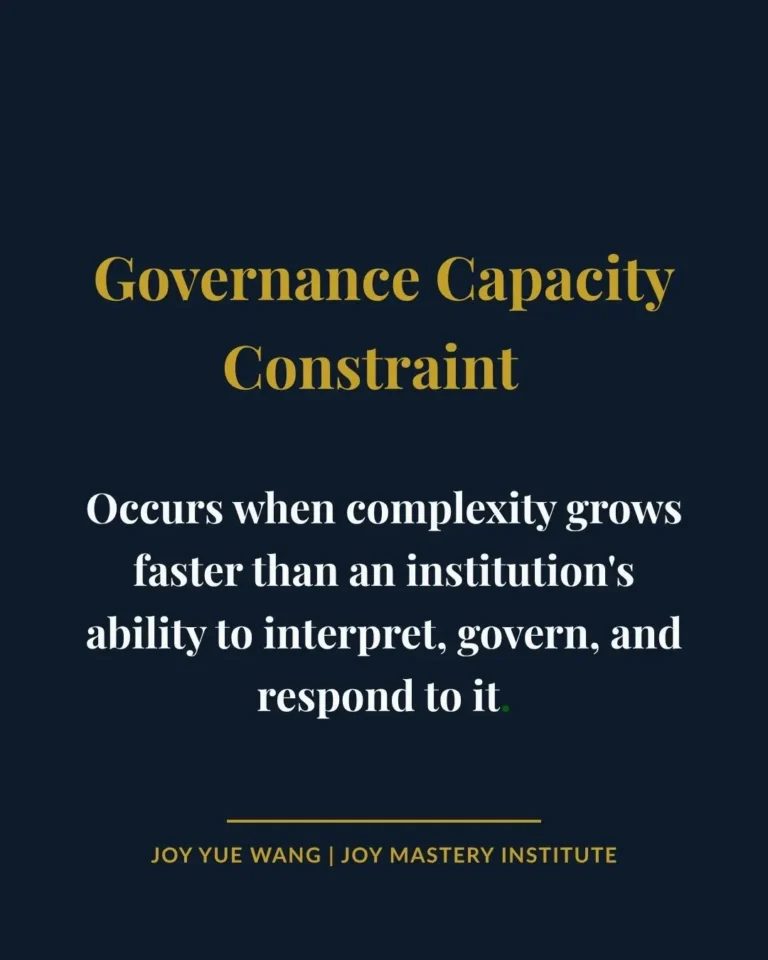
Scale vs Governance Capacity
What Is Decision Architecture?
A decision is visible.
The architecture that produces it is not.
Decision Architecture examines the invisible system that produces the visible decision.
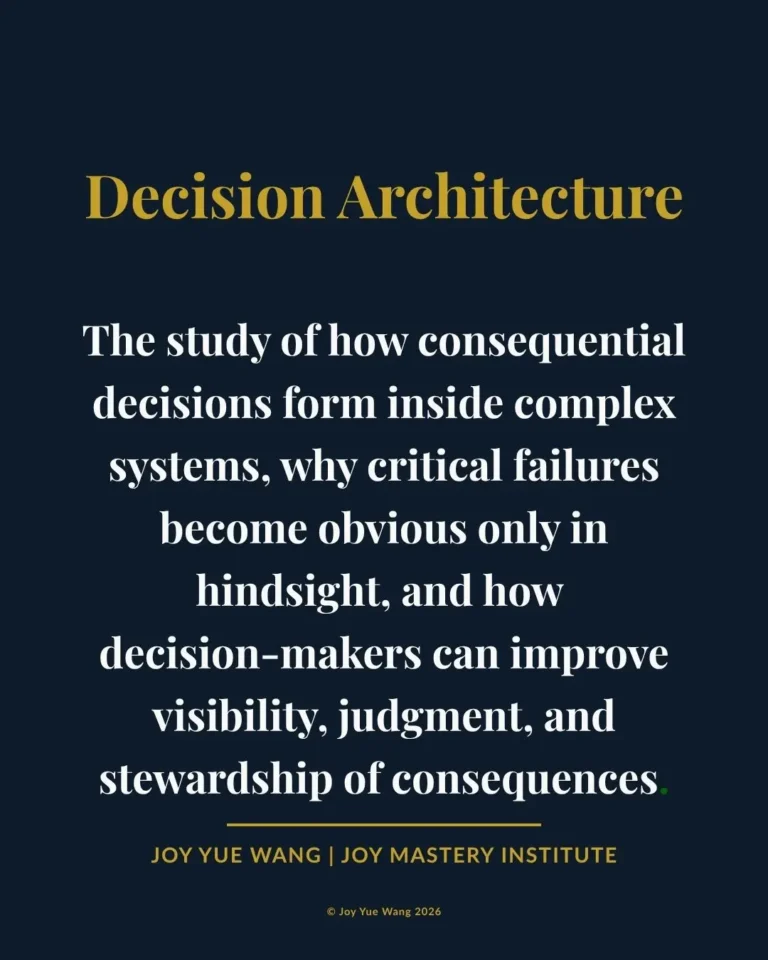
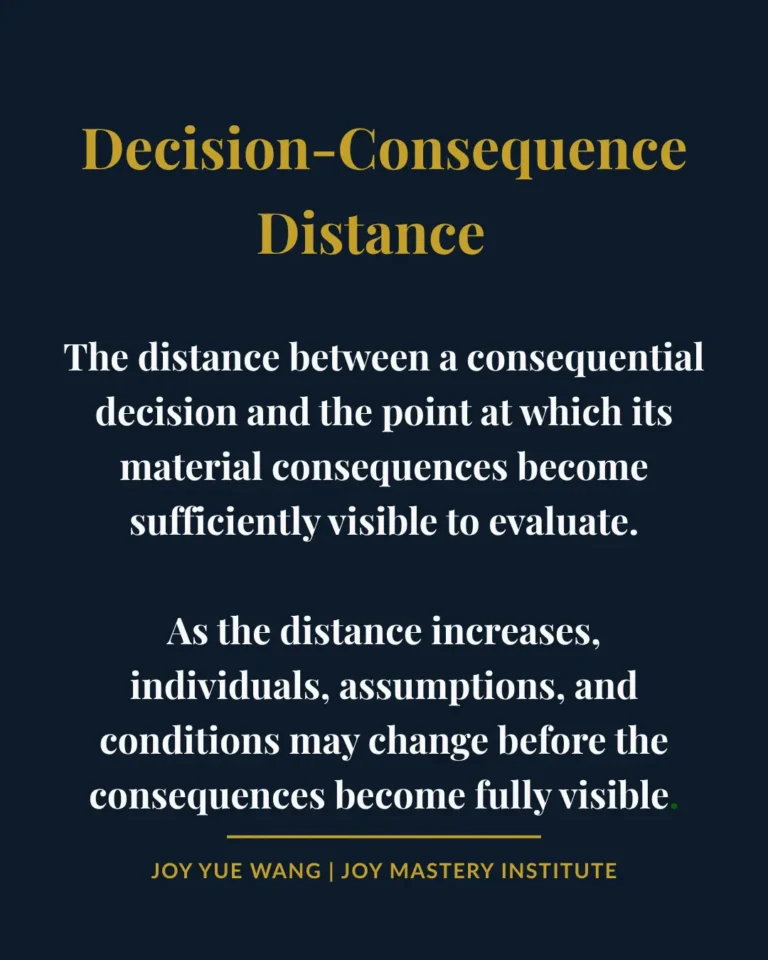
Decision Architecture studies how consequential decisions form inside complex systems, why critical failures become obvious only in hindsight, and how decision-makers can improve visibility, judgment, and stewardship of consequences.
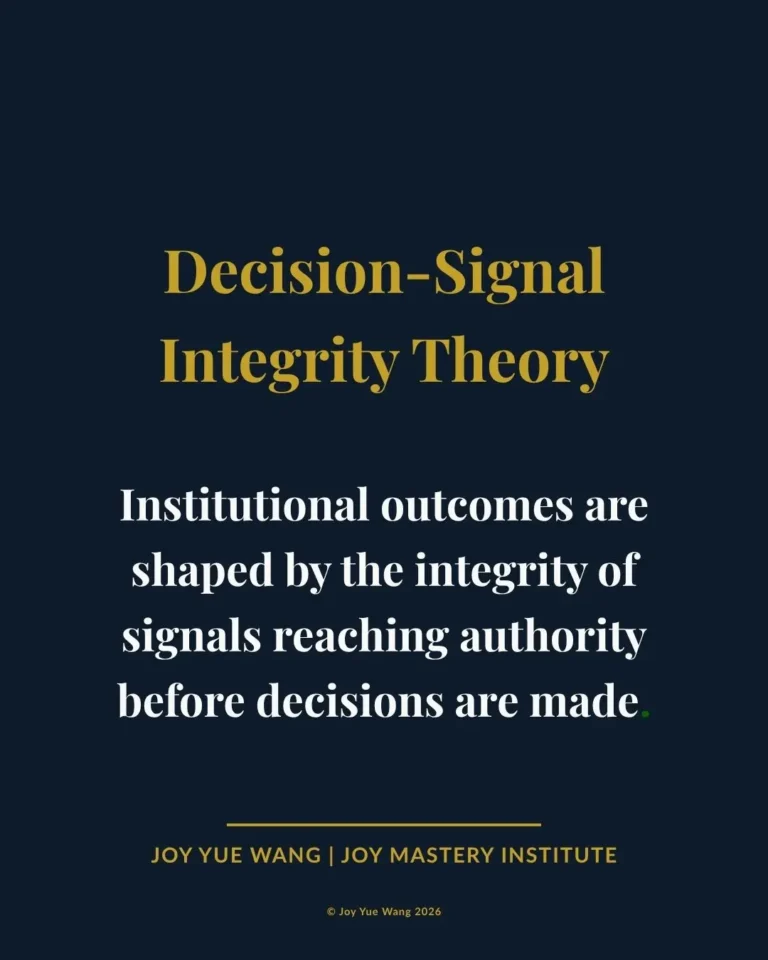
At its foundation is Decision–Signal Integrity Theory: Institutional outcomes are shaped by the integrity of the signals reaching authority before decisions are made.
5.5 min
The Language of Decision Architecture
Together, these concepts form the field of Decision Architecture - a language for understanding how institutions perceive reality, make decisions, and shape consequences.
Selected cases, essays and short lectures on how consequential decisions form inside complex institutions—and why critical problems often become obvious only in hindsight.
Occasional Decision Architecture insights and selected invitations from Joy Mastery Institute. No regular newsletter.